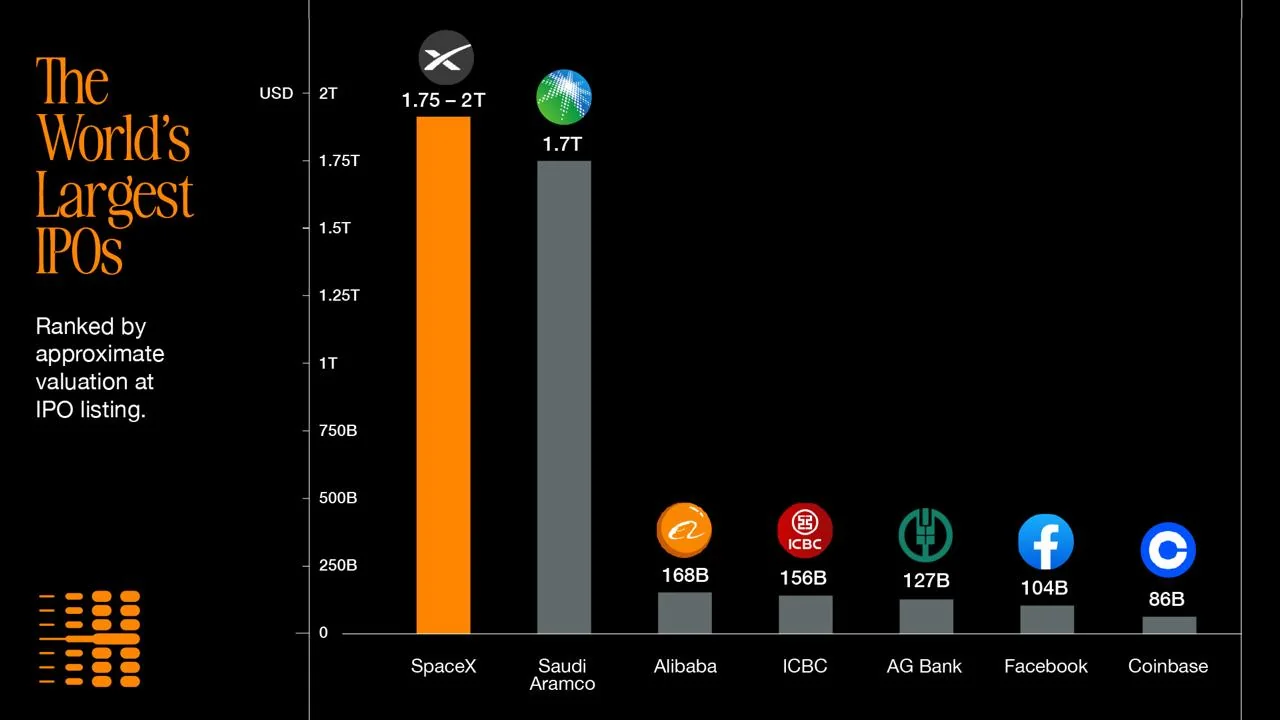
SpaceX is targeting a June 12 Nasdaq listing under the ticker SPCX, according to the market timeline now circulating around the deal.
At an estimated valuation range of 1.75 trillion to 2 trillion dollars, the listing would become the largest IPO in history, moving ahead of Saudi Aramco in 2019 and the other giants that defined previous public market cycles.
The number matters. But the market structure matters more.
Public markets used to discover giants
For most of modern market history, an IPO was the moment a company entered broad price discovery. Public investors met the business, analysts built models, institutions formed views, and the market began deciding what the company was worth.
That order has changed. The most important private technology companies now spend longer in private markets, raise more capital before listing, and reach global relevance before ordinary investors ever see a ticker.
By the time a company like SpaceX reaches the public market, the public is not discovering the giant. It is inheriting one.
The new timing gap
That creates a structural timing gap. Investor demand forms years before the product surface exists. The company is visible, culturally dominant, and institutionally watched, but access remains fragmented and opaque.
The result is a market where attention arrives early, liquidity arrives late, and most investors are forced to wait until the largest part of the private value creation has already happened.
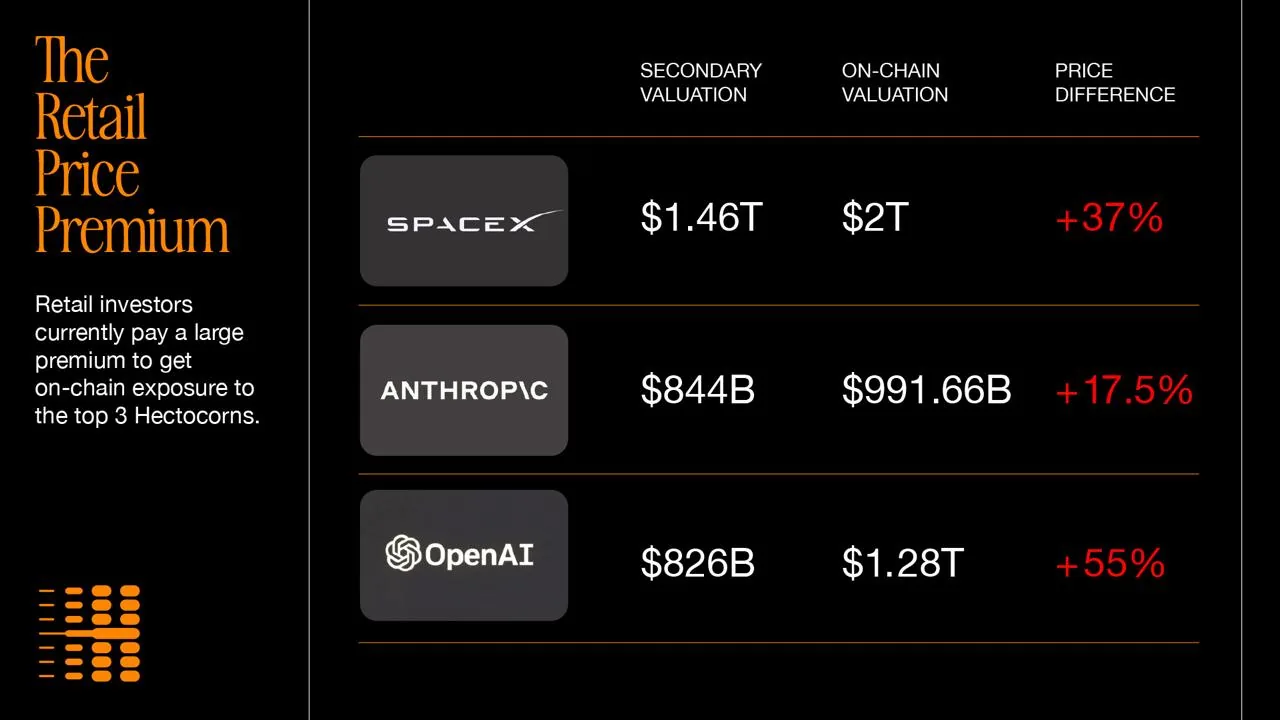
This is the market Hecto is built around. Predictions make demand visible before the listing. PMX can tokenise private-market exposure. Vaults can route qualified access where a more direct path is appropriate.
The point
A SpaceX IPO at this scale would not be a single company story. It would be a signal that the center of gravity has shifted.
Public markets used to discover giants. Now they inherit them.